
Integrating & Rebranding MathUP
My Role
Product Design Manager, UX and brand
Scope
Cross-cultural rebrand + platform integration
Market
Canadian product adapted for U.S. K–12
Introduction
Problem Statement
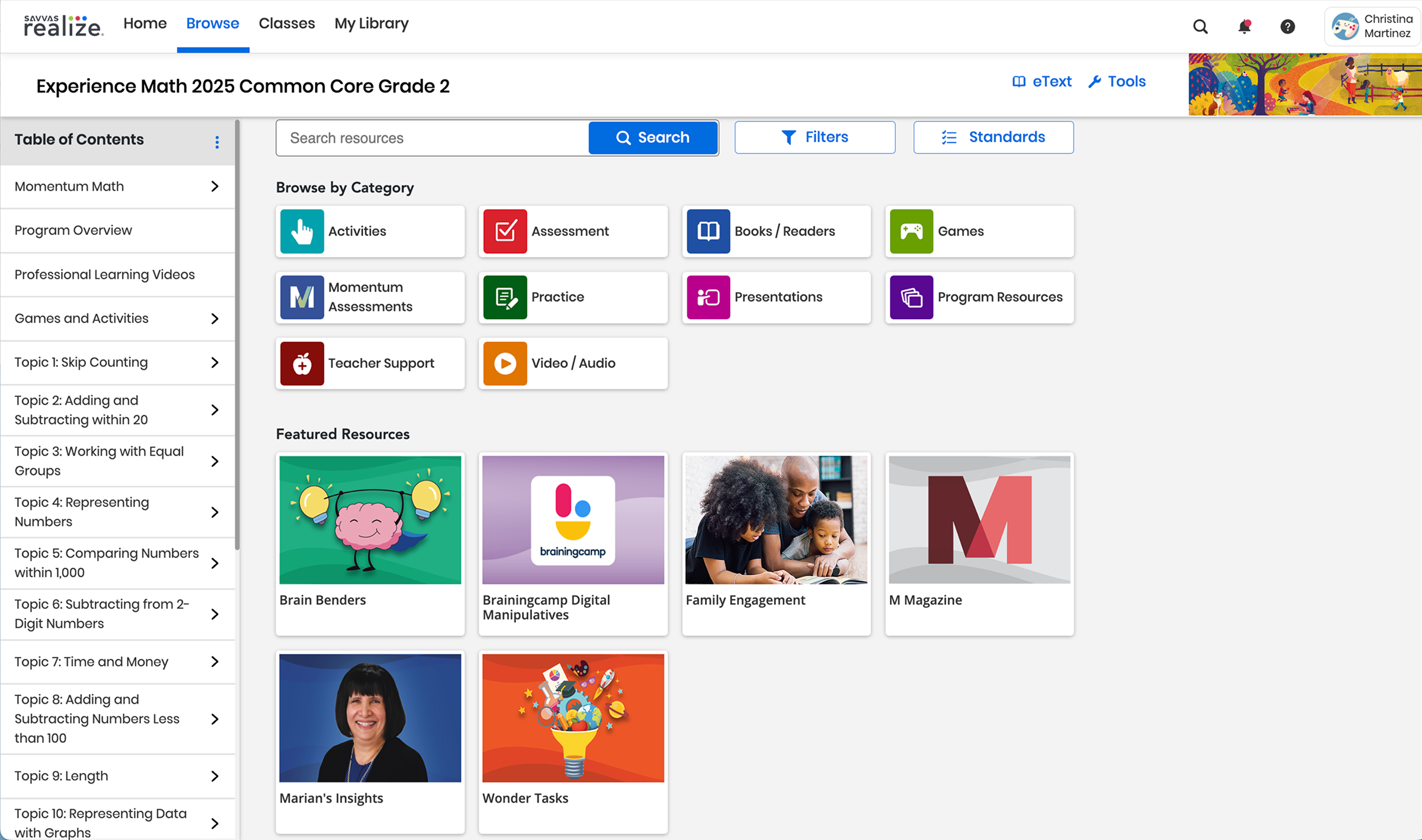
Bringing a beloved Canadian math platform to the U.S. market meant more than a rebrand. MathUP’s content, instructional model, and platform architecture all needed to be evaluated, adapted, and integrated into our existing Realize system — without losing what made it work for teachers in the first place.
Comprehensive understanding and alignment of MathUP’s content with U.S. educational standards.
Effective integration of MathUP’s platform into our existing Realize (teacher platform) system.
Preservation of the educational essence of MathUP while customizing it for U.S. users.
The Team and Our Approach
Alongside an Instructional Designer, who functioned as a collaborative partner, we tackled these challenges by:
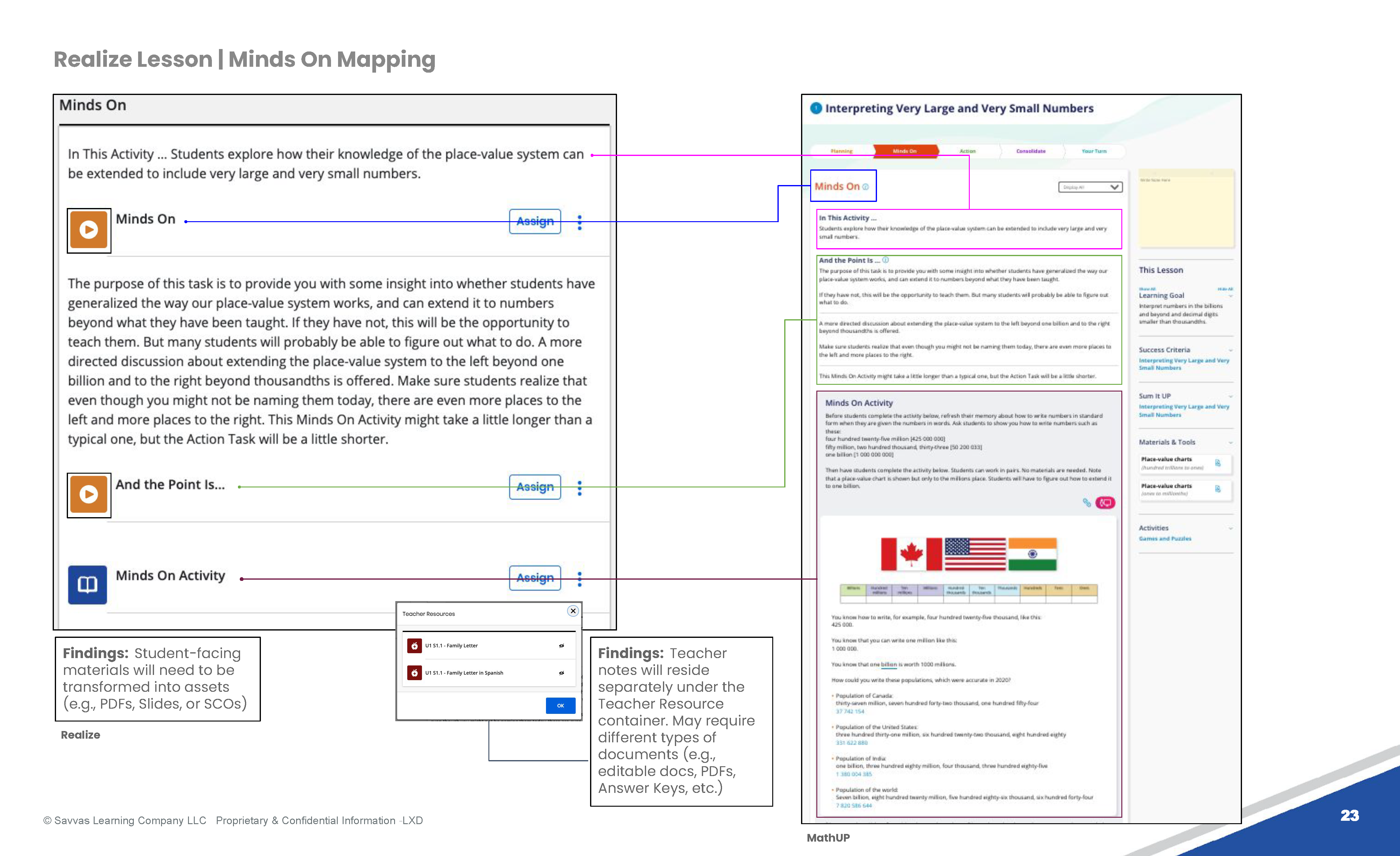
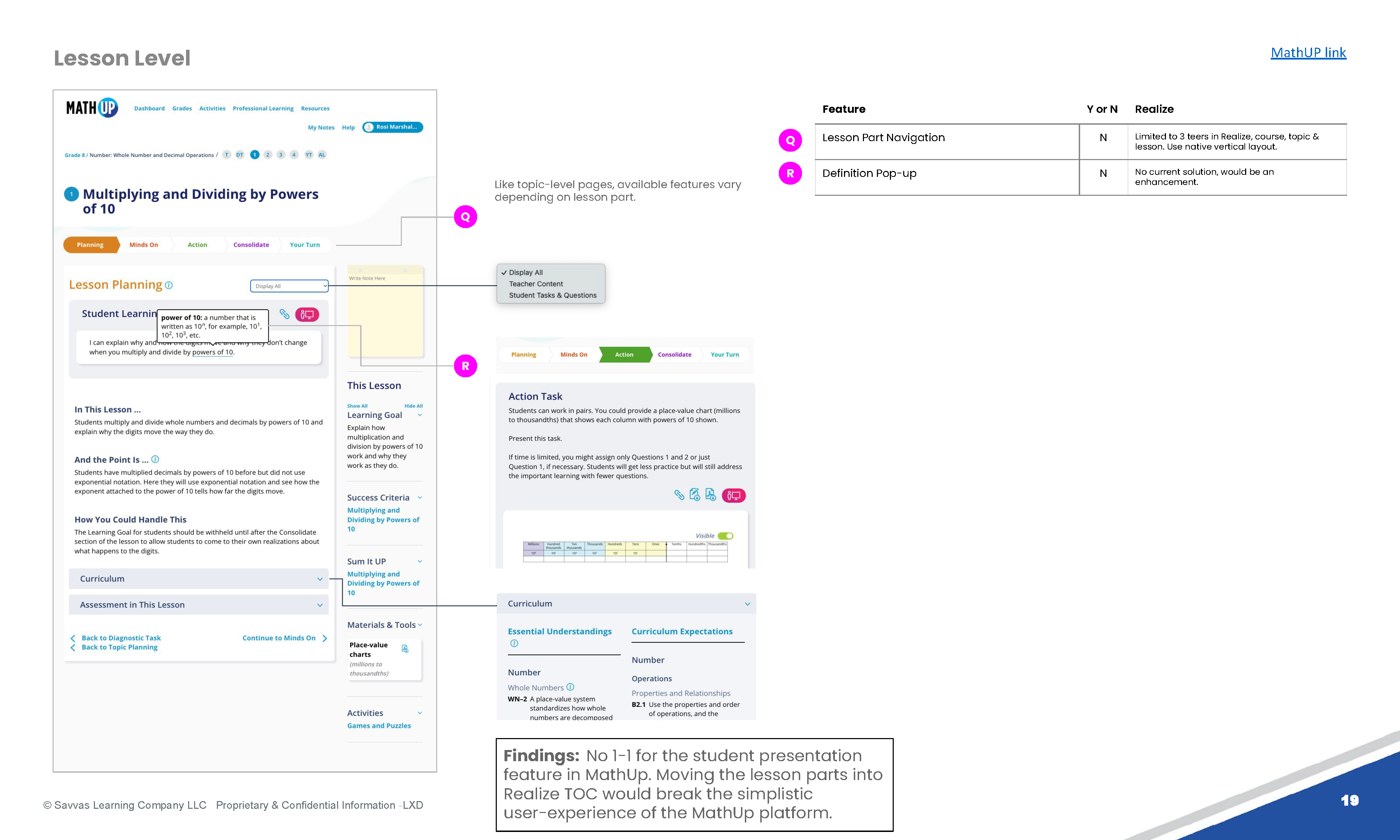
Content and Platform Mapping
Working with cross-functional teams to ensure MathUP’s content fit U.S. educational standards and seamlessly integrated its platform with our own.
Research Leadership
Alongside my team, led key research efforts defining goals and questions that guided our strategic approach.
Design Leadership
Led product designers in creating Experience Math’s user interface, focusing on an intuitive and engaging user experience.
User Experience Focus
Concentrated on teacher and student experiences, evaluating products and assessing MathUP’s assets for potential adaptation and usability.
Global Takeaways
Our team presented comprehensive findings and recommendations, instrumental in business case planning and prototyping.
Outcomes and Impact
Ensured each project phase aligned with strategic objectives and upheld quality. This resulted in the successful prototyping and U.S. market introduction of Experience Math.
Notable accomplishments include:
The integration and rebranding of a foreign educational product for the U.S. audience.
Enhanced user experience, specifically designed for U.S. educators and students.
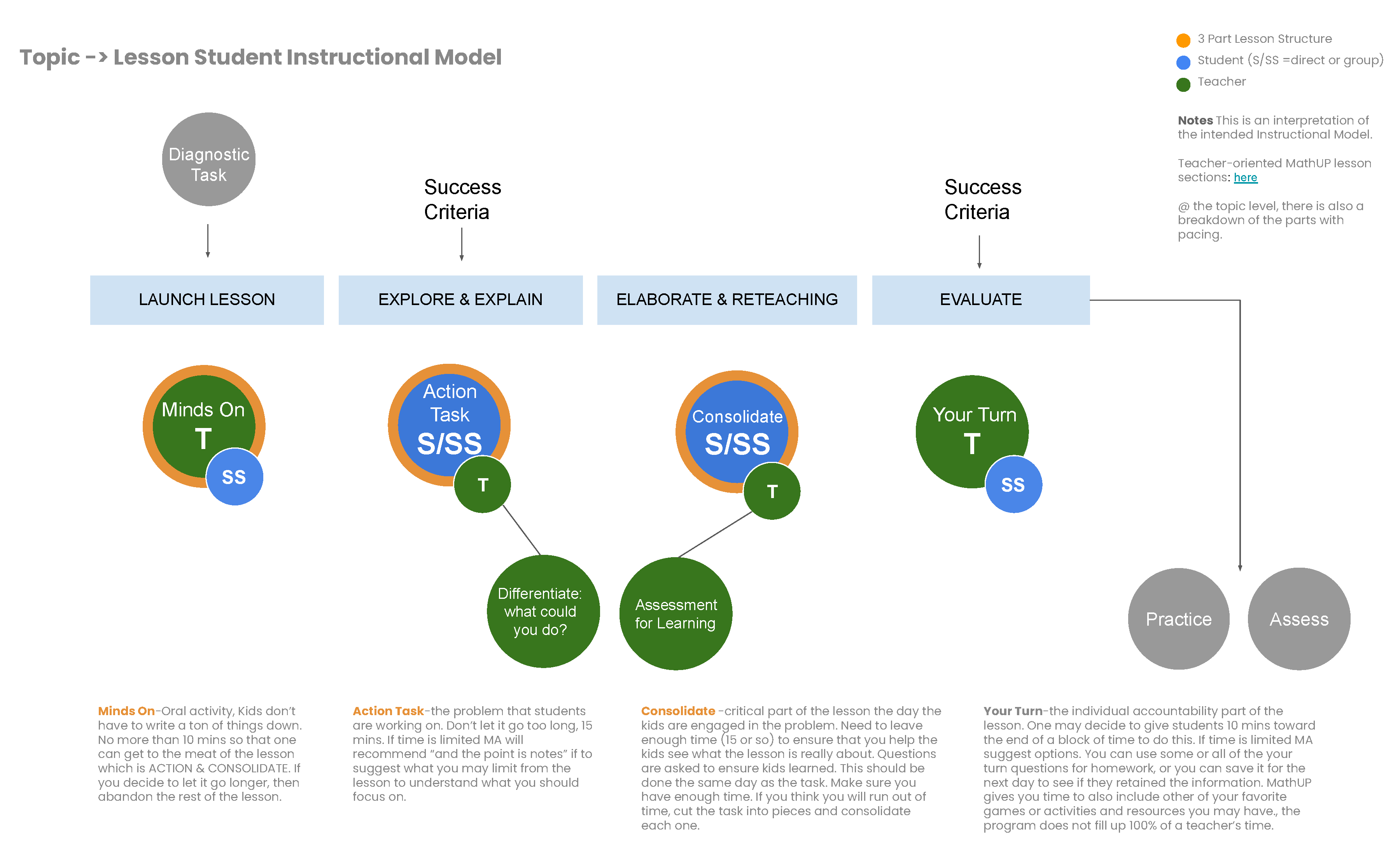
Adaptation of MathUP’s instructional model to the U.S. educational environment.
Efficient use of existing resources, avoiding unnecessary reinvention.
Conclusion
Taking a product built for one country’s curriculum and making it work for another is genuinely complex — the instructional models, standards, and teacher expectations don’t just translate directly. What I’m most proud of here is that we didn’t cut corners on that complexity. We did the research, mapped the content properly, and launched something that actually works for U.S. educators rather than just looking like it does.